Orchestrating Calm:
Redesigning Support Flows during Flight Cancellations
In the high-stress environment of flight cancellations, communication gaps lead to employee burnout and passenger anxiety. This 10-week interaction design project focused on synchronizing digital touchpoints for airport agents and passengers to transform chaotic "Irregular Operations" (IROPS) into a coordinated recovery experience.
Studio Project Collaboration With
Southwest Airlines - Renamed Snowflake for academic purposes
Team
Samantha Borri, Ibrahim Bah, Joshua Greenberg
Category
Interaction Design - UI/UX Design
Skills / Tools
User Research - Product Design - Figma
Role
Digital Design Lead
Time Frame
10 weeks
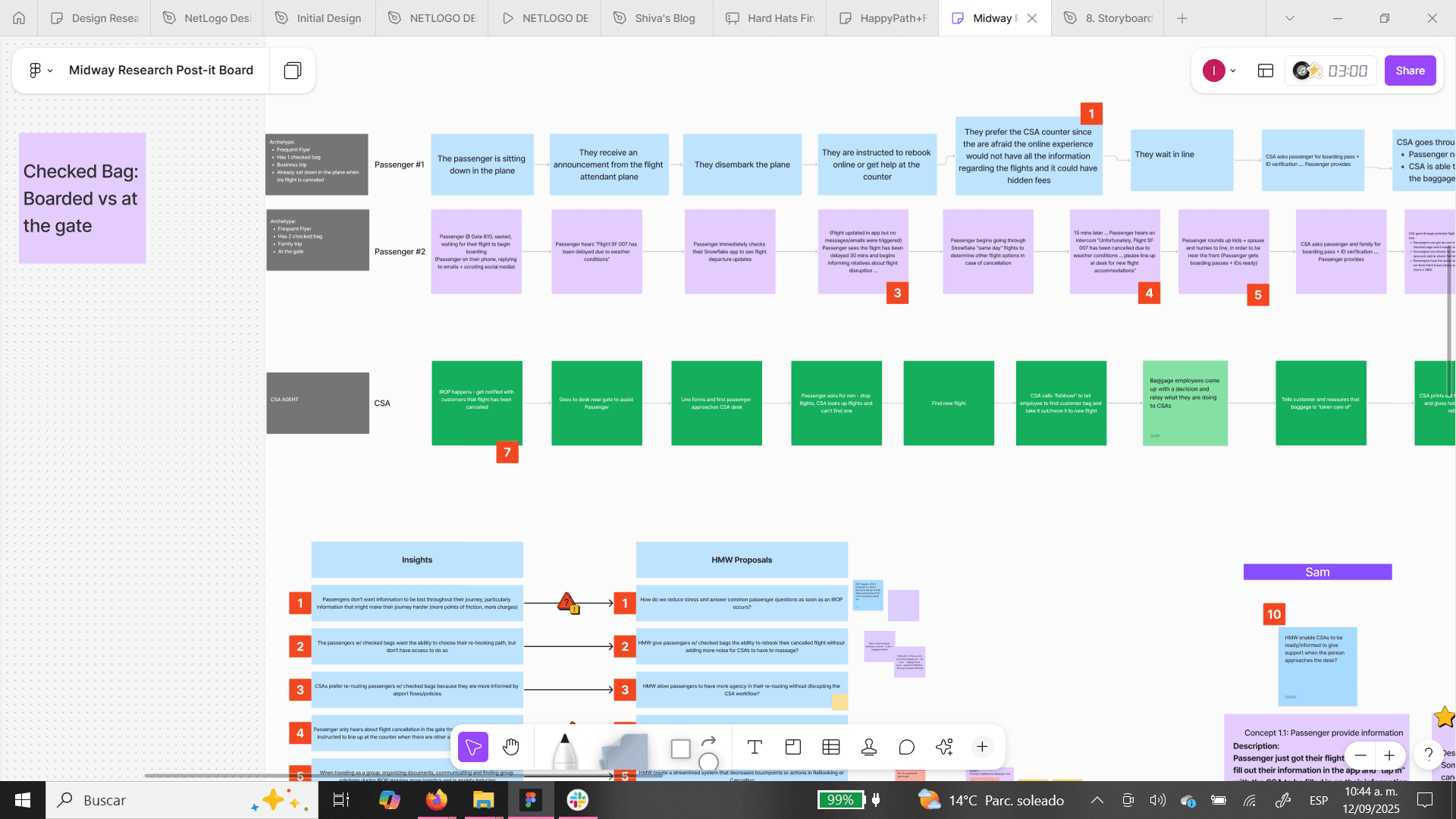
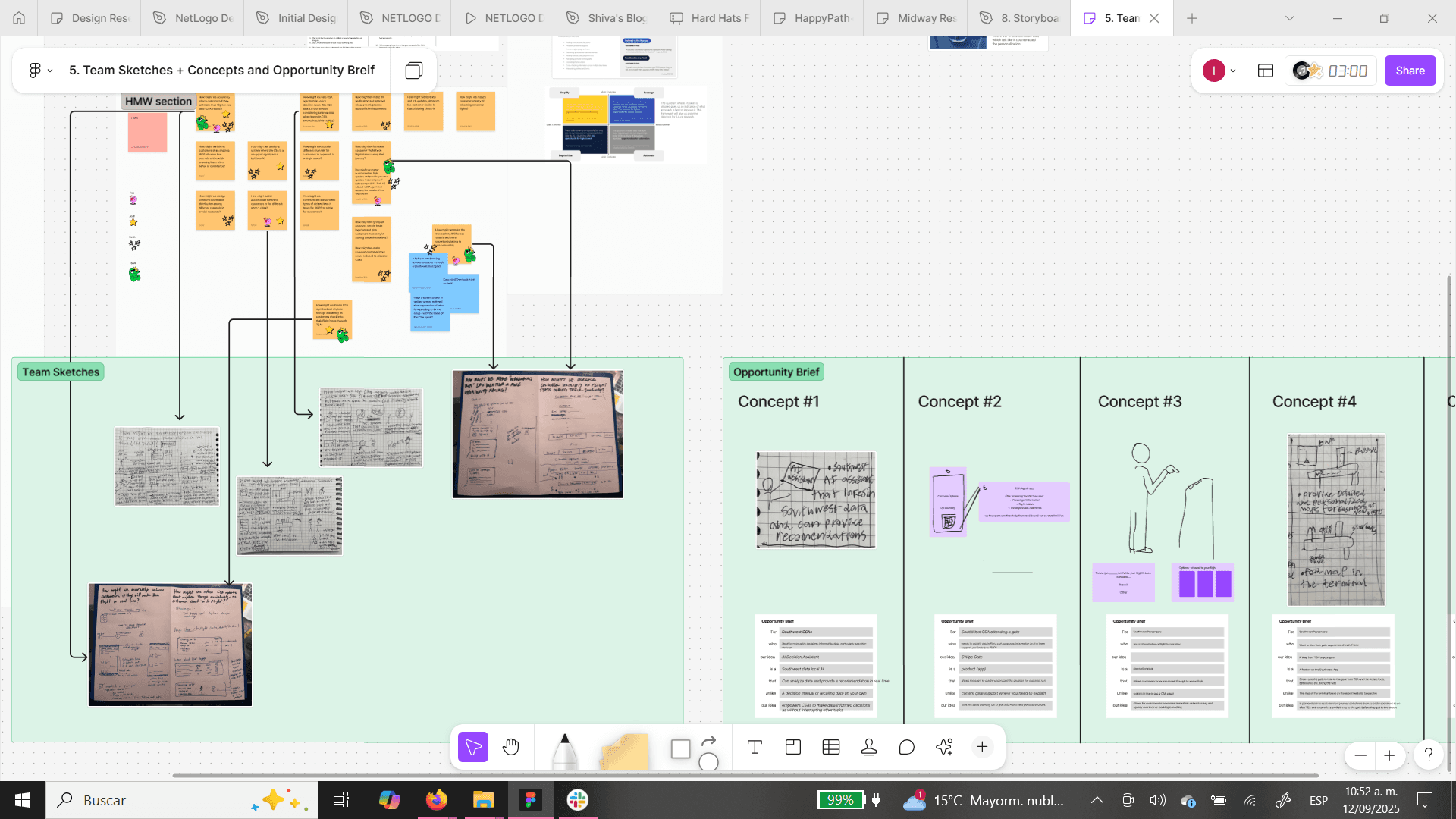
The synthesis of our field research allowed us to better understand user journeys, derive relevant insights and subsequent "How Might We"'s to be able to start ideating future concepts to build out.
From what support agents see, to what information passengers receive, in both informational screens at the gate and personal screens, how can this all be orchestrated to make sure people have a better understanding of what to do. At least make sure they know where to ask for help, if they do so desire.
Identifying Friction in the Terminal
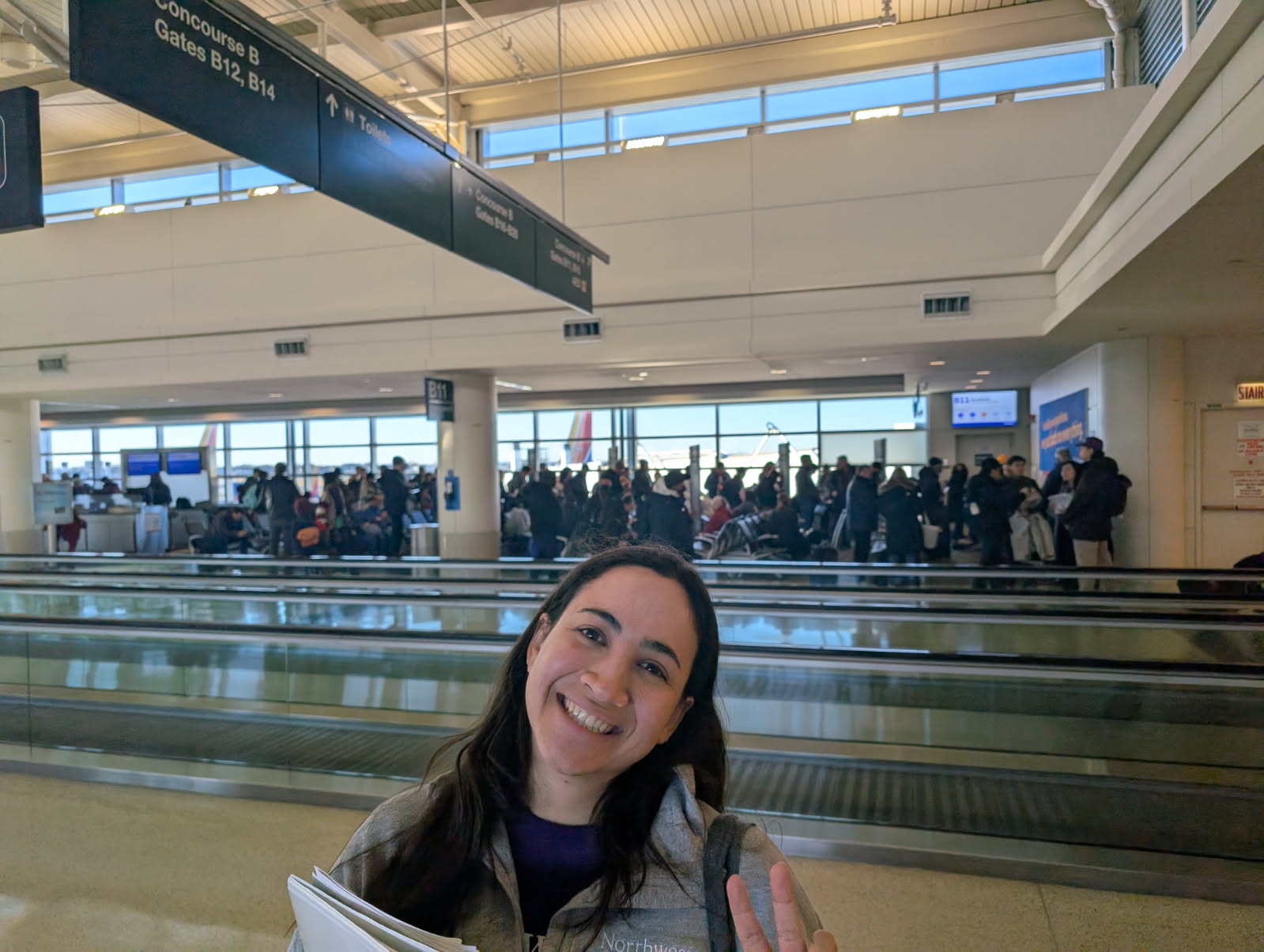
Through ethnographic research at Midway Airport, we shadowed agents during live cancellations. We discovered that the "chaos" wasn’t just a lack of information, but a lack of synchronized information. Agents were overwhelmed by manual coordination, while passengers felt abandoned by static, unhelpful gate displays.
We mapped the service ecosystem to ensure every stakeholder—from the distressed passenger to the supporting "free agent"—had a unified source of truth. By designing for the "back-stage" (agent-to-supervisor coordination), we enabled a more seamless "front-stage" experience for the customer.
What Made This Project Special?
Probably one my favorite design projects so far, our team not only got to opportunity to ideate and design for several stakeholders in what can be a very stressful situation, but we also got the opportunity to merge digital and service design in a way that I think achieved the challenge of it all.
I also jumped into Figma and lead the team for the UI work, learning as much as I could to use the Design System given to us in a cohesive way and make sure our final deliverables were up to the standards of our client.
Before
✨ After ✨
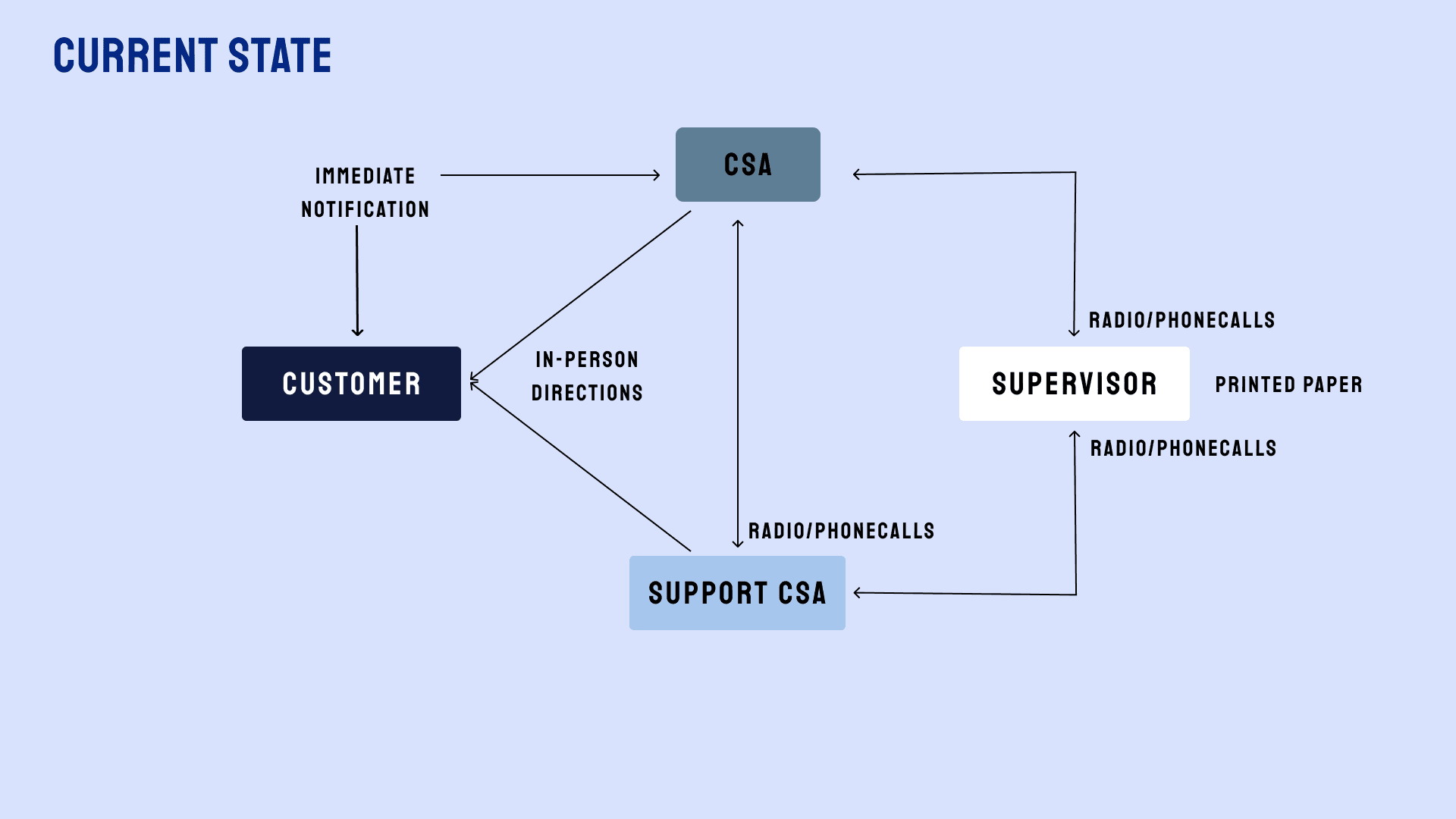
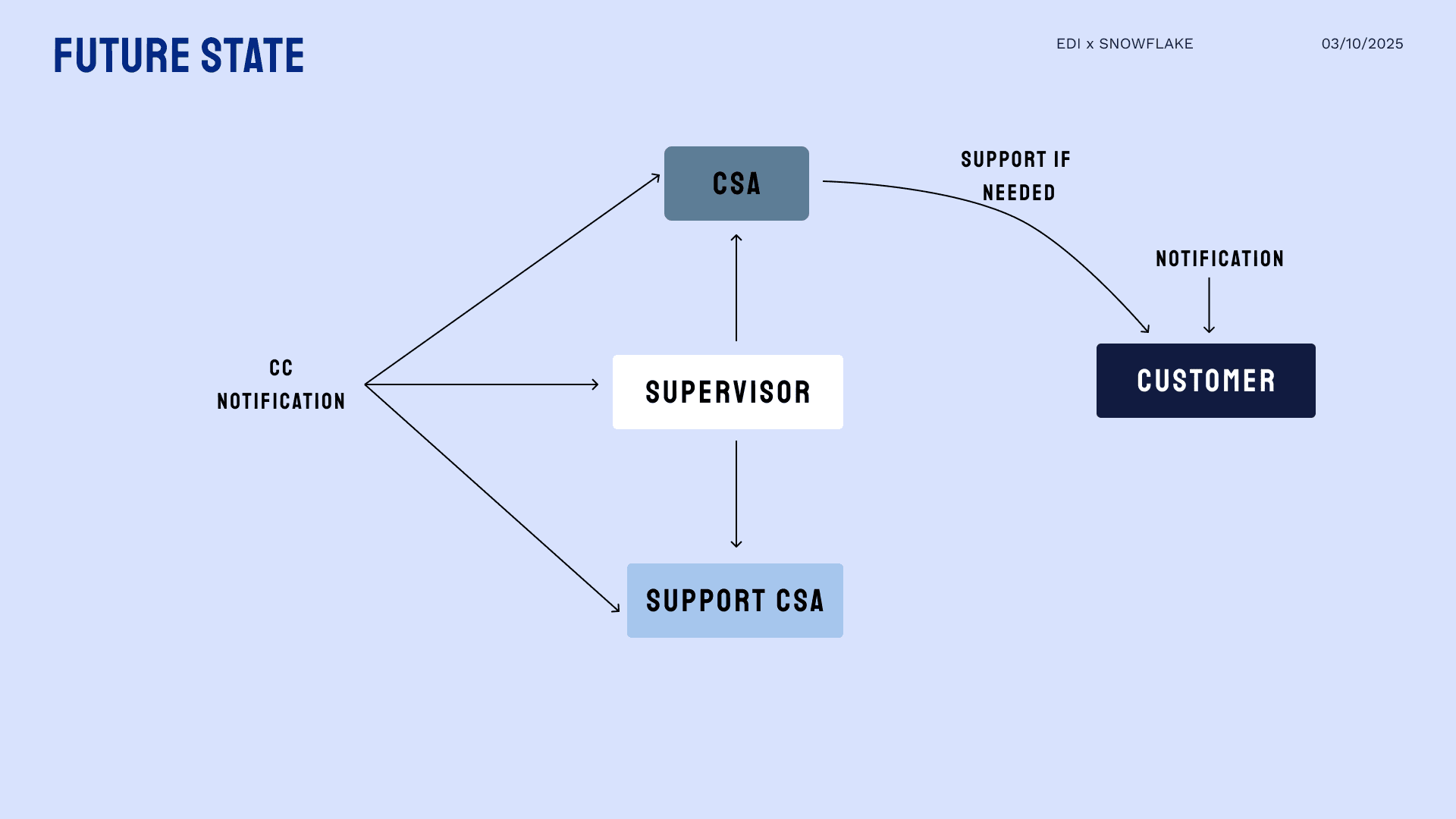
Our redesign allowed for communication to be streamlined, and give Airline Agents, if only seconds, time to respond to what the situation needs, while the customer is also redirected.
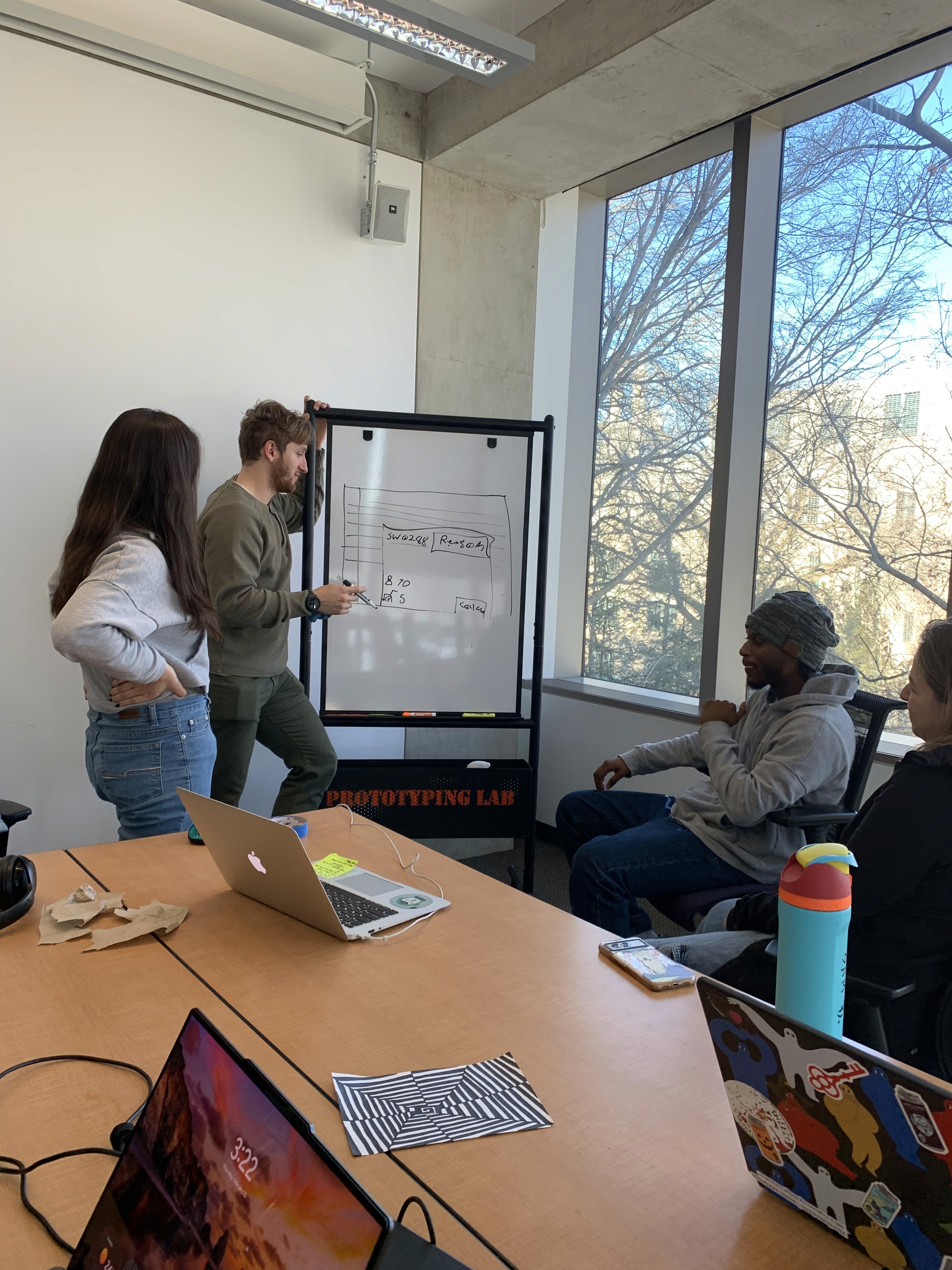
Engineering Design: Navigating Technical Constraints
Coming from an engineering background, this project was a lesson in balancing technical feasibility with human-centered service needs. We prioritized a scalable design system in Figma that could bridge the gap between complex backend airline data and intuitive frontend interactions.
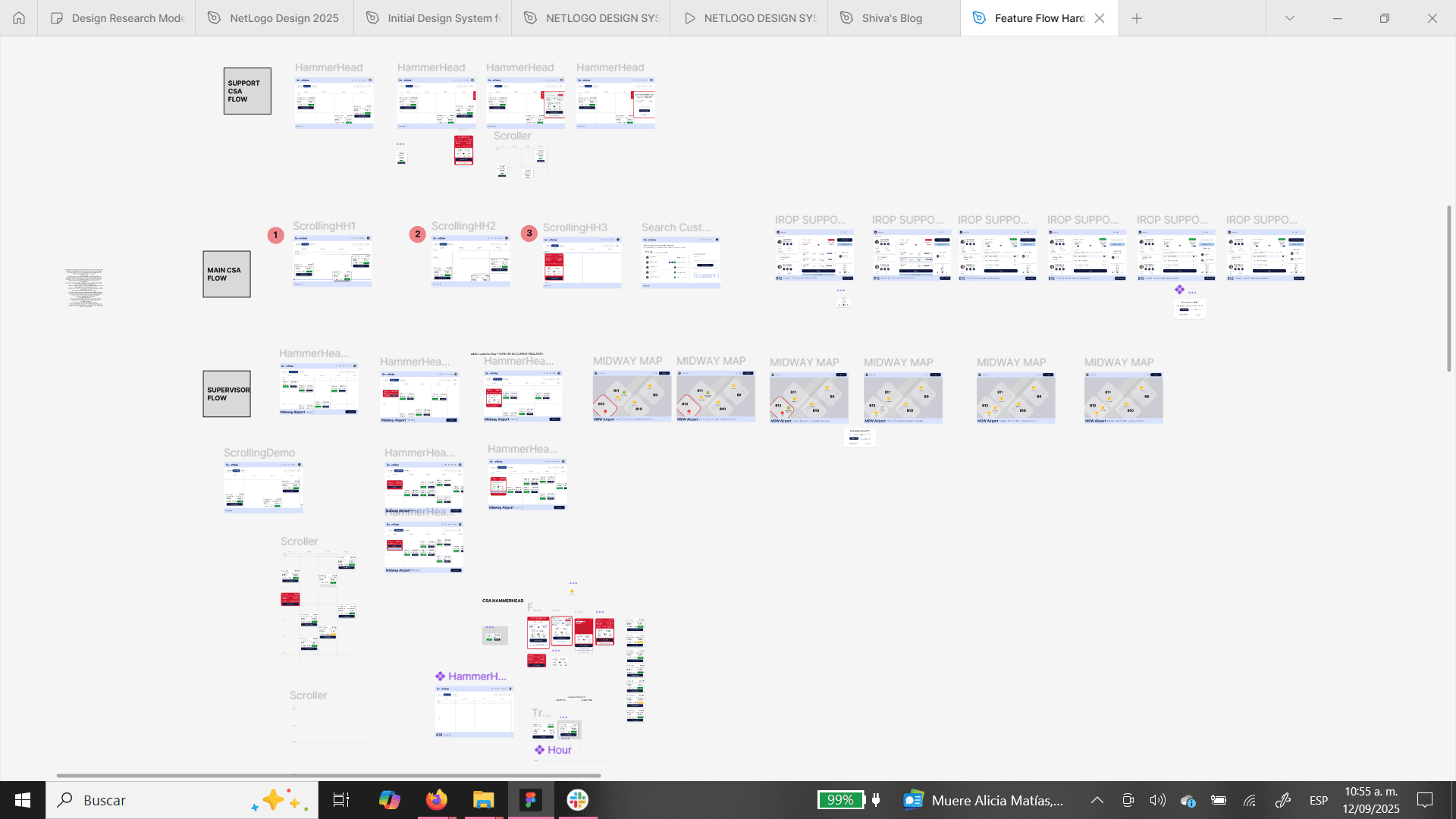
A Multi-Interface Ecosystem for Rapid Recovery.
Our solution replaces fragmented legacy tools with a suite of interconnected interfaces. By streamlining internal task assignment for Supervisors and providing "Next Step" clarity for Passengers, we reduced the cognitive load on gate agents and empowered travelers with autonomous rebooking options.
In the end, our solution streamlined internal communication, while giving customers the tools to decide on their next steps and turn a situation of chaos into a variety of options to those involved.
Screens were redesigned for the following stakeholders:
Passengers Agents
Personal Phone screens and Gate Announcement screens were taken into consideration to ensure passengers would receive the correct notifications.
Main Gate Agents
Designated Airline Agent who is in charge of the gate whose flight got cancelled.
Agent Superviors
In charge of various Agents. In this scenario, they have higher visibility over what is currently happening and can request assistance from another Agent to those facing the flight cancellation.
Support Gate Agents
Another Airline Agent who may be free, and may be called upon to help an influx of passengers who need more support.
Since this was a Studio Collaboration @ EDI, we worked under the project name "Snowflake".